What is the JEPQ ETF and How Does It Work?
For investors seeking high passive cash flow, the JPMorgan Nasdaq Equity Premium Income ETF (JEPQ) has become one of the most popular funds on the market. But what exactly is it?
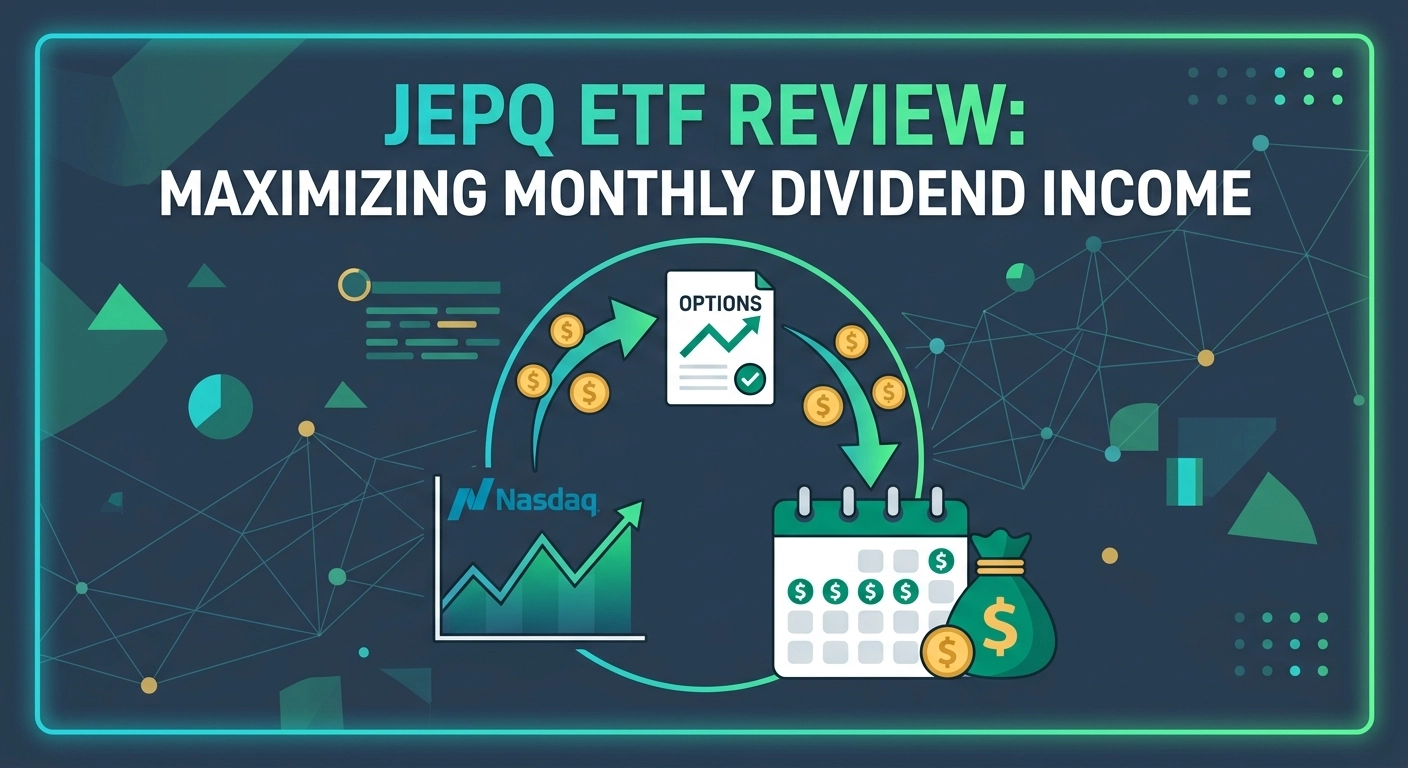
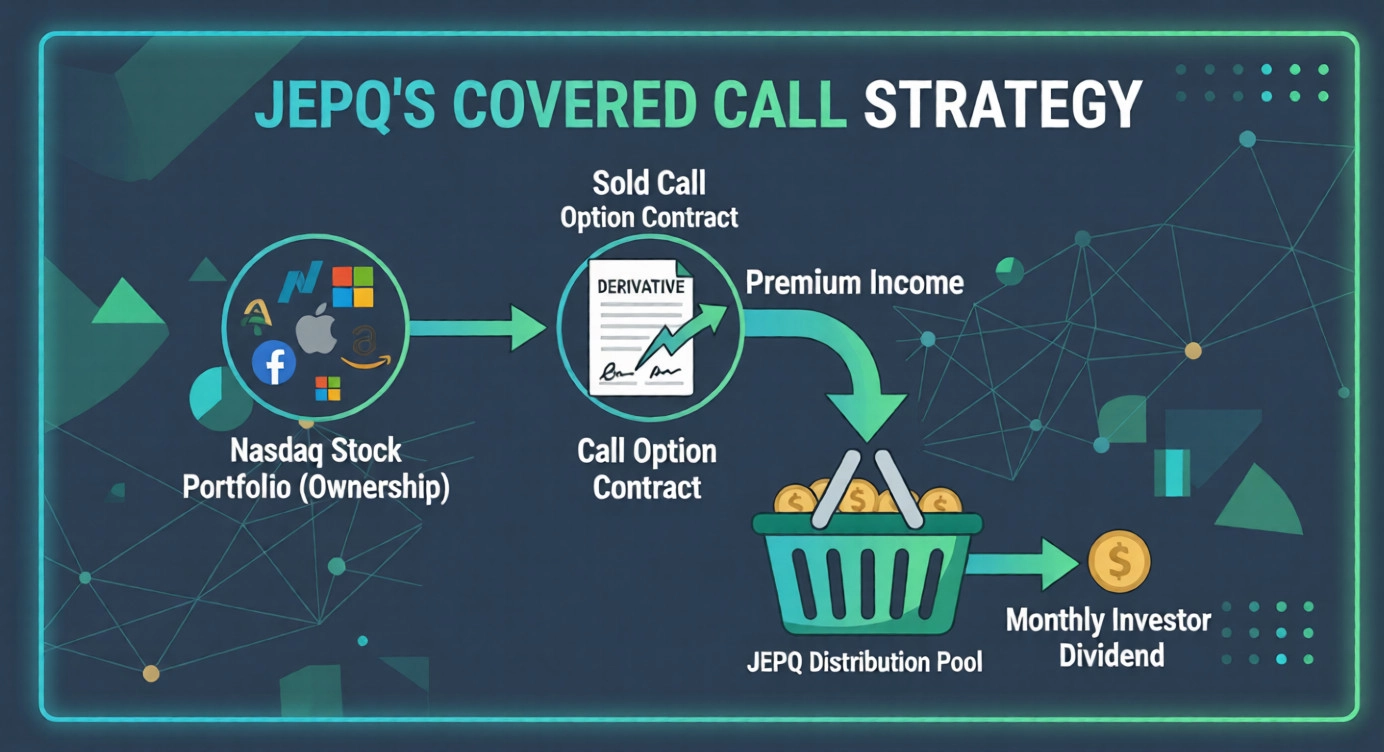
JEPQ is an actively managed ETF that holds a portfolio of large-cap US stocks from the Nasdaq-100 index (like Apple, Microsoft, and Nvidia). To generate its massive yield, the fund managers sell “covered call” options against the portfolio. In simple terms, they trade away some of the extreme upside potential of these tech stocks in exchange for immediate, high cash premiums. These premiums are then distributed to shareholders as monthly dividends.
JEPQ Dividend History and High Yield Potential
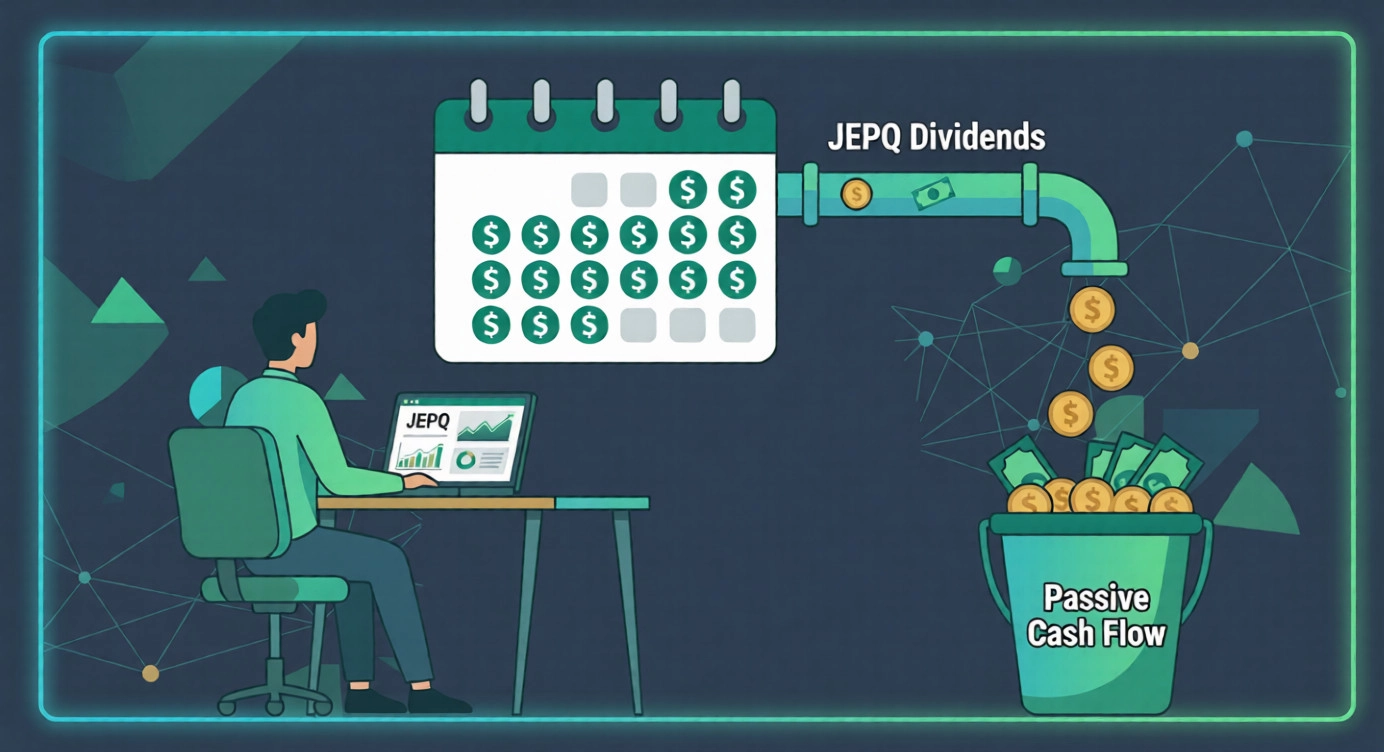
One of the biggest selling points of JEPQ is its distribution schedule. Unlike traditional ETFs that pay quarterly, JEPQ pays dividends every single month.
Historically, the fund has maintained an annual dividend yield hovering around the 9% to 11% range. This makes it an incredibly attractive option for retirees, income seekers, or anyone looking to build a reliable monthly passive income stream without constantly selling their assets.
Pros and Cons of High-Yield Covered Call ETFs
Before adding JEPQ to your portfolio, it’s essential to weigh the benefits and risks:
- The Pros: Exceptional monthly cash flow, lower volatility compared to the broader Nasdaq-100, and exposure to top-tier tech companies.
- The Cons: Capped upside. During massive bull markets, JEPQ will likely underperform standard growth ETFs (like QQQ) because the covered calls limit how high the stock price can climb. Additionally, the dividend payouts can fluctuate month-to-month based on market volatility.
Is JEPQ Right for Your Portfolio?
If your primary goal is generating immediate cash flow rather than maximizing pure capital appreciation, JEPQ is a powerhouse ETF to consider.
Curious how much passive income you could make by investing in JEPQ? Try our JEPQ Income Projection Calculator to simulate your monthly cash flow, reinvestments, and future portfolio value!